
In 1997, IBM’s Deep Blue did something that no machine had ever done before. It became the first computer system to defeat a reigning world chess champion in a match under standard tournament controls.
Although IBM’s supercomputer isn’t much like modern AI systems, its victory in the six-game marathon against Garry Kasparov marked a turning point in our history.
For chess enthusiasts and computer junkies, this was a revolutionary moment. Many in the business world looked on, viewing it as a high-stakes vanity project.
A second turning point came when Google DeepMind’s AlphaGo, which learned to master the ancient Chinese game of Go – a complex board game of strategy, creativity and ingenuity – defeated human Go world champion Lee Sedol, a decade before experts thought possible.
Google DeepMind highlights that AlphaGo’s victory inspired a new era of AI systems.
It was conclusive proof that the underlying neural networks could be applied to complex domains, while the use of reinforcement learning showed how machines can learn to solve incredibly hard problems for themselves, simply through trial-and-error.
Rollercoaster tycoons
Many in the Google DeepMind team are former game developers, including former CEO and current Alphabet Chief Scientist Demis Hassabis, who (at age 17) co-designed a 1994 hit game called Theme Park where players create and operate amusement parks.
He is also a Nobel laureate and towering figure in the world of AI, who has been at the forefront of shaping the technology for many years.
Since Google DeepMind’s foundation in 2010, the constrained yet rich worlds of games have played a critical role in understanding intelligence, Google DeepMind’s
Senior Director, Strategy and Special Projects, Adrian Bolton, and the lab’s Director of the Inception Team, Alexandre Moufarek, demonstrate in a blog they recently co-published on Google DeepMind’s website.
“[Games] have driven some of our biggest AI breakthroughs, from mastering Atari to helping solve protein structure prediction - and they are still at the heart of what we do,” the pair outline.
Gaming is very much at the forefront of gen AI applications – but its reach extends far beyond game developers.
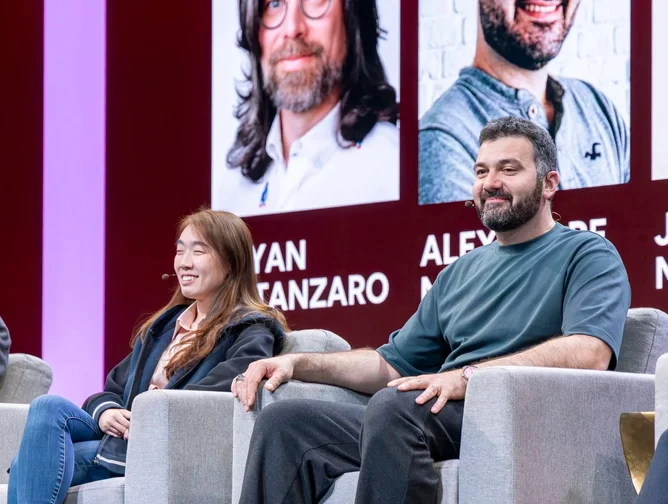
“Our goal at Google DeepMind is to build general systems: AI agents that can safely adapt to the worlds they navigate, the characters and players they interact with and generalise to situations they haven’t seen before,” Alexandre explains to AI Magazine.

Barking up the decision tree
With Rockstar Games’ upcoming Grand Theft Auto 6 on the horizon, many players are wondering about the impact that AI systems could have on NPCs and unscripted actions in expansive open-world games.
“As a game developer before joining DeepMind, I’ve spent my years using scripted behaviours and decision trees for a reason: they are deterministic, controllable and reliable,” Alexandre tells AI Magazine.
“The limitation is that the game only knows how to respond to states explicitly hard-coded ahead of time. Once a player steps outside those anticipated branches, the NPC or Quest Manager can’t infer what the player is trying to do.”