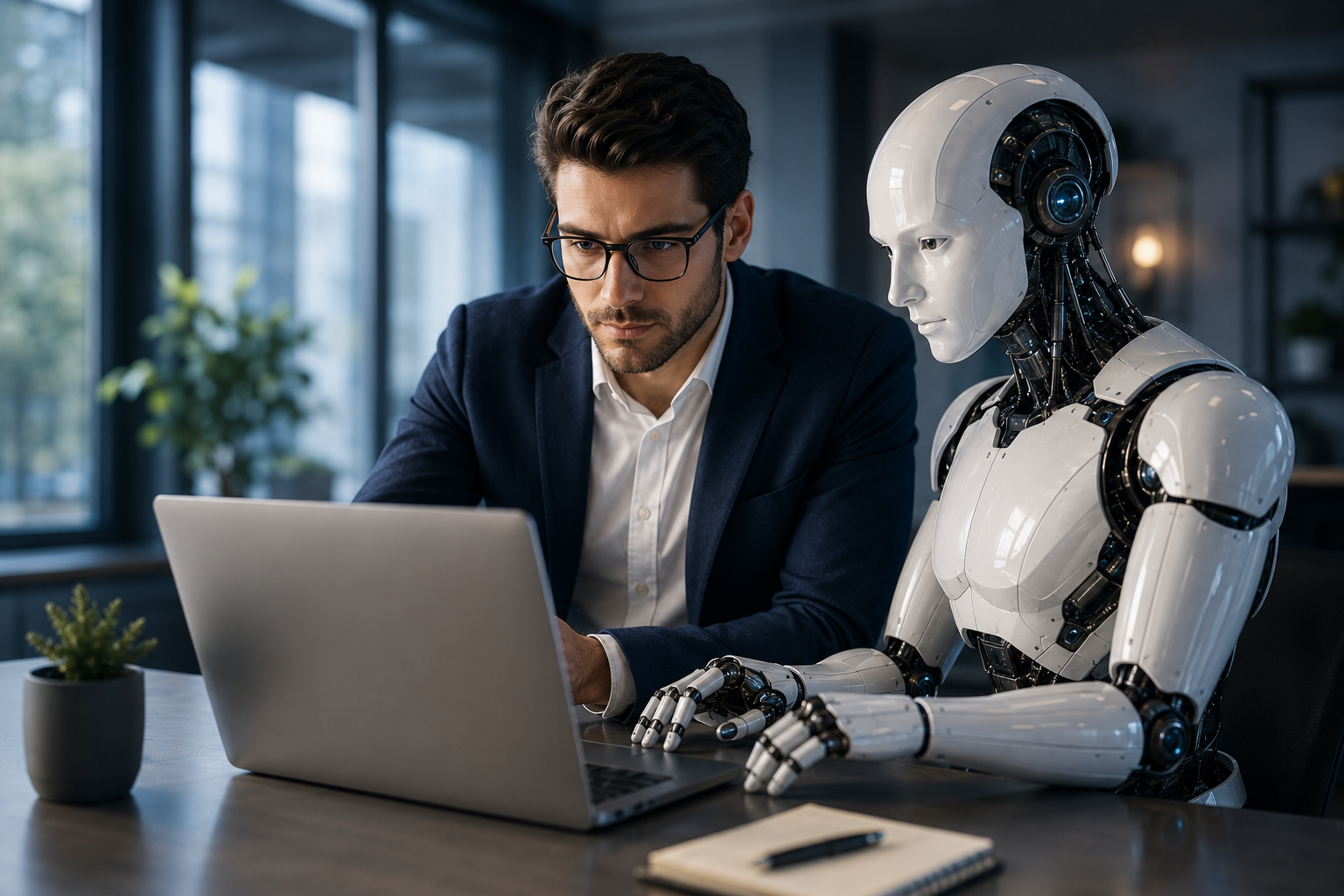
Artificial Intelligence (AI) is rapidly transforming the way we live and work. From virtual assistants and smart search engines to advanced healthcare systems and business automation tools, AI has become an important part of our daily lives. Its ability to process vast amounts of data, identify patterns, and perform repetitive tasks with speed and accuracy has made it a valuable resource for businesses and individuals alike. As technology continues to evolve, AI is helping organizations improve productivity, reduce costs, and make better-informed decisions.
However, despite its impressive capabilities, AI is not a replacement for human intelligence. While machines can analyze information and automate tasks, they cannot truly understand emotions, relationships, ethics, or creativity in the same way humans can. Human beings possess unique qualities such as empathy, critical thinking, innovation, and the ability to adapt to complex situations. These qualities allow people to solve problems, build meaningful connections, and create ideas that go beyond data and algorithms.
One of the most discussed topics today is whether AI will replace jobs. While AI may change how certain tasks are performed, it is unlikely to completely replace skilled professionals. Instead, it is reshaping the workplace by helping employees work more efficiently. Many industries are already using AI to assist with routine tasks, allowing professionals to focus on higher-value work that requires judgment, creativity, and strategic thinking.
Take web developers, for example. AI can generate code snippets, suggest solutions, and help troubleshoot issues, but it cannot fully understand a client's unique business requirements, create custom user experiences, or make strategic technical decisions. Successful websites still require experienced developers who can combine technical knowledge with creativity and problem-solving skills. AI serves as a useful assistant, but the expertise of a professional developer remains essential.
The same applies to social media specialists and digital marketers. AI can help generate content ideas, analyze audience data, and schedule posts, but it cannot replace the human understanding of brand identity, customer behavior, cultural trends, and emotional engagement. Building a successful online presence requires creativity, communication skills, and strategic planning that go far beyond automated content generation. The most successful marketers are those who use AI as a tool while maintaining the human touch that audiences value.
Designers, engineers, writers, consultants, and many other professionals are experiencing similar changes. AI can support their work by automating repetitive tasks and providing insights, but human expertise remains the driving force behind innovation and quality. Technology can assist in the process, but it is people who bring vision, leadership, and creativity to every project.
The future is not about humans competing against AI—it is about collaboration. Organizations that embrace both human talent and artificial intelligence will be better positioned to innovate and succeed in an increasingly digital world. Rather than fearing AI, professionals should focus on learning how to leverage it effectively. Those who combine their expertise with the power of AI will be able to achieve more, work smarter, and deliver greater value to their clients and communities.
As AI continues to evolve, one thing remains clear: technology is at its best when it enhances human capabilities rather than replacing them. The future belongs to individuals and businesses that understand how to balance innovation with human insight, creating a world where people and AI work together to achieve extraordinary results.